Why the Galápagos Islands Remain a Natural Paradise Galápagos Travelers Dream Of
An Archipelago Unlike Any Other
Few places on earth spark the imagination quite like the Galápagos Islands. This remote volcanic archipelago, part of Ecuador, sits roughly 600 miles off the South American coast. It is a UNESCO World Heritage site and a living laboratory where evolution unfolds in plain sight. For anyone who values raw, unscripted nature, the islands offer something increasingly rare: a chance to witness wildlife that has never learned to fear humans.
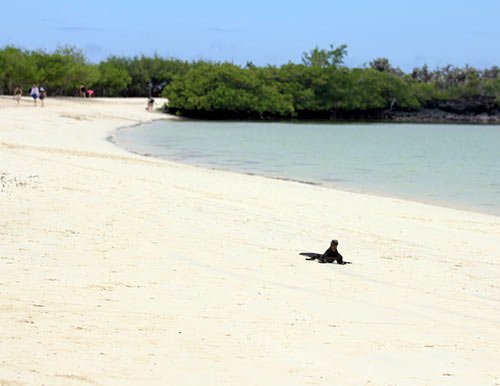
The phrase natural paradise galápagos is not marketing hyperbole. It describes a place where the boundary between land and sea blurs into a single, vibrant ecosystem. Here, marine iguanas sunbathe on black lava rocks, blue-footed boobies perform their comical mating dance just meters from trails, and giant tortoises move with ancient patience across the highlands. The experience is immersive, humbling, and deeply personal.
The Landscape as a Living Museum
Each island in the chain has its own character. San Cristóbal, the easternmost island, greets visitors with rolling green hills and a sheltered bay where sea lions lounge on the beach as if posing for photographs. Santa Cruz, the hub of tourism, holds the Charles Darwin Research Station and the bustling port town of Puerto Ayora. Isabela, the largest island, is a volcanic powerhouse with landscapes that shift from lunar plains to lush highlands. Bartolomé, a small islet near the center of the archipelago, offers a short but steep hike to a viewpoint that reveals the iconic crescent-shaped beach and the deep blue sea beyond.
The geology itself tells a story. These islands were born from volcanic hotspots, and they remain geologically active. Some are young enough that their lava flows are still bare. Others have developed enough soil to support dense thickets of Scalesia trees and Opuntia cacti. Walking through these environments, you feel the planet's pulse. It is not a manicured park. It is a raw, functioning natural system, and that authenticity is what draws travelers who prefer substance over spectacle.
Wildlife Encounters Without Barriers
One of the defining features of the Galápagos is the lack of wariness in its animals. During a panga ride along the shoreline, you might drift within arm's reach of a nesting blue-footed booby. Snorkeling in the shallows, a sea lion may circle you out of curiosity, its whiskers brushing your mask. The giant tortoise, slow and deliberate, allows you to observe its grazing habits without retreating into its shell. This trust is not naive; it evolved because there were no natural predators on land for most of the archipelago's history.

But that trust also requires responsibility. The national park rules are strict for good reason. Visitors must stay on marked trails, keep a distance from wildlife, and never feed or touch any animal. These regulations protect both the animals and the experience. A natural paradise galápagos is fragile. One careless action can disrupt years of natural behavior. Guides remind you of this constantly, and their reminders are not mere formality.
Exploring Beyond the Shoreline
The real magic of the Galápagos often lies beneath the surface. Snorkeling is the most accessible way to enter this underwater world. In places like the coves of Santa Cruz or the volcanic outcrops of Bartolomé, you can float among schools of surgeonfish, parrotfish, and the occasional white-tip reef shark. The water is cool but clear, and the visibility can exceed fifty feet on a good day. Kayaking offers a quieter alternative, letting you glide along coastlines where sea lions haul out on rocks and marine iguanas cling to the spray zone.
For those who prefer to stay dry, a glass-bottom boat provides a window into the shallows without getting wet. This is a good option for families with young children or anyone who feels uneasy in open water. The perspective is different, but the richness of the coral-free, volcanic seabed is still striking. You see the same sea stars, urchins, and resting rays that snorkelers do, just through a pane of glass.
Practical Considerations for First-Time Visitors
Getting to the Galápagos requires a flight from mainland Ecuador, usually from Quito or Guayaquil. Upon arrival at the airports on Baltra or San Cristóbal, you must pay the park entrance fee and undergo a baggage inspection to prevent invasive species from entering the islands. This process is thorough but efficient. It is part of what keeps the ecosystem intact.
Accommodation options range from simple hostels in Puerto Ayora to more exclusive arrangements. A luxury yacht like the Natural Paradise offers a way to experience the islands with fewer crowds and more flexibility. With only sixteen passengers, the yacht can access smaller coves and less visited landing sites. The guides on these vessels are typically naturalists with deep knowledge of the local flora, fauna, and geology. They interpret the landscape in real time, pointing out finch beak variations or lava cactus adaptations that you might otherwise miss.
That said, a small-ship experience is not for everyone. The itineraries are set, the space is intimate, and you share meals and excursions with the same group for the duration. If you value solitude, some of the larger vessels offer private balconies and more personal cabins. But if you want to maximize time with expert naturalists and avoid the logistical friction of island hopping on your own, a dedicated cruise is hard to beat.
The Human History and Its Lessons
Charles Darwin visited the Galápagos in 1835 aboard the HMS Beagle. He spent five weeks collecting specimens and making observations that would later inform his theory of natural selection. The finches, mockingbirds, and tortoises he studied are still here, and their variations are still visible. But the islands have changed since Darwin's time. Introduced species such as rats, cats, and goats have caused extinctions and habitat damage. Conservation efforts are ongoing, with eradication programs and strict biosecurity measures in place.
Visiting the Galápagos today means participating in that conservation story. Every entrance fee goes toward park maintenance, research, and protection. Choosing a responsible operator matters. Some tours cut corners on guiding standards or visit sensitive sites during breeding seasons. A good operator respects the carrying capacity of the islands and schedules visits to minimize impact. When you book, ask about their guide-to-guest ratio, their waste management practices, and whether they contribute to local conservation projects.
Timing Your Visit
The Galápagos has two main seasons, each with distinct conditions. The warm, wet season runs from December to May, bringing higher water temperatures, calmer seas, and better visibility for snorkeling. This is also the peak season for wildlife activity, with many seabirds nesting and sea lions pupping. The cool, dry season from June to November brings stronger currents, cooler waters, and more frequent fog. However, this is the best time to see large schools of hammerhead sharks and whale sharks around the northern islands like Darwin and Wolf.
There is no bad time to visit, but your priorities matter. If you want calm seas and warm water for snorkeling, plan for the wet season. If you are after big pelagic species and don't mind a bit of swell, the dry season delivers. Keep in mind that holidays and school breaks bring higher prices and fuller boats. Booking six months in advance is wise for peak periods.

A Final Word on the Experience
The Galápagos Islands are not a beach resort destination. There are no all-inclusive buffets, no water parks, no nightclubs. What you get instead is a direct connection to the natural world. The phrase natural paradise galápagos captures that essence, but only if you are willing to meet it on its own terms. You trade convenience for authenticity. You trade speed for stillness. And in that trade, you gain something that no photograph or documentary can fully convey: the quiet, unedited presence of life as it has existed for millennia.
Whether you arrive on a luxury yacht or a budget liveaboard, the islands demand your attention. They ask you to look closely, listen carefully, and move slowly. That is not a limitation. It is an invitation.